Introduction
Imagine you've developed a genuinely impressive product. It performs better than many competing products. You've spent years perfecting it, and customers who use it are impressed. There's just one problem. Not enough people know it exists. That's the challenge Blendtec faced in 2006. The American company manufactured powerful blenders used in commercial settings, including restaurants and food service businesses.
Its machines had an impressive reputation among people familiar with them. But selling those same blenders to everyday consumers was another matter. The products weren't cheap. And explaining why someone should pay more for a Blendtec instead of an ordinary kitchen blender wasn't particularly easy. So what did Blendtec do? It started putting things into its blenders that nobody in their right mind would normally blend.
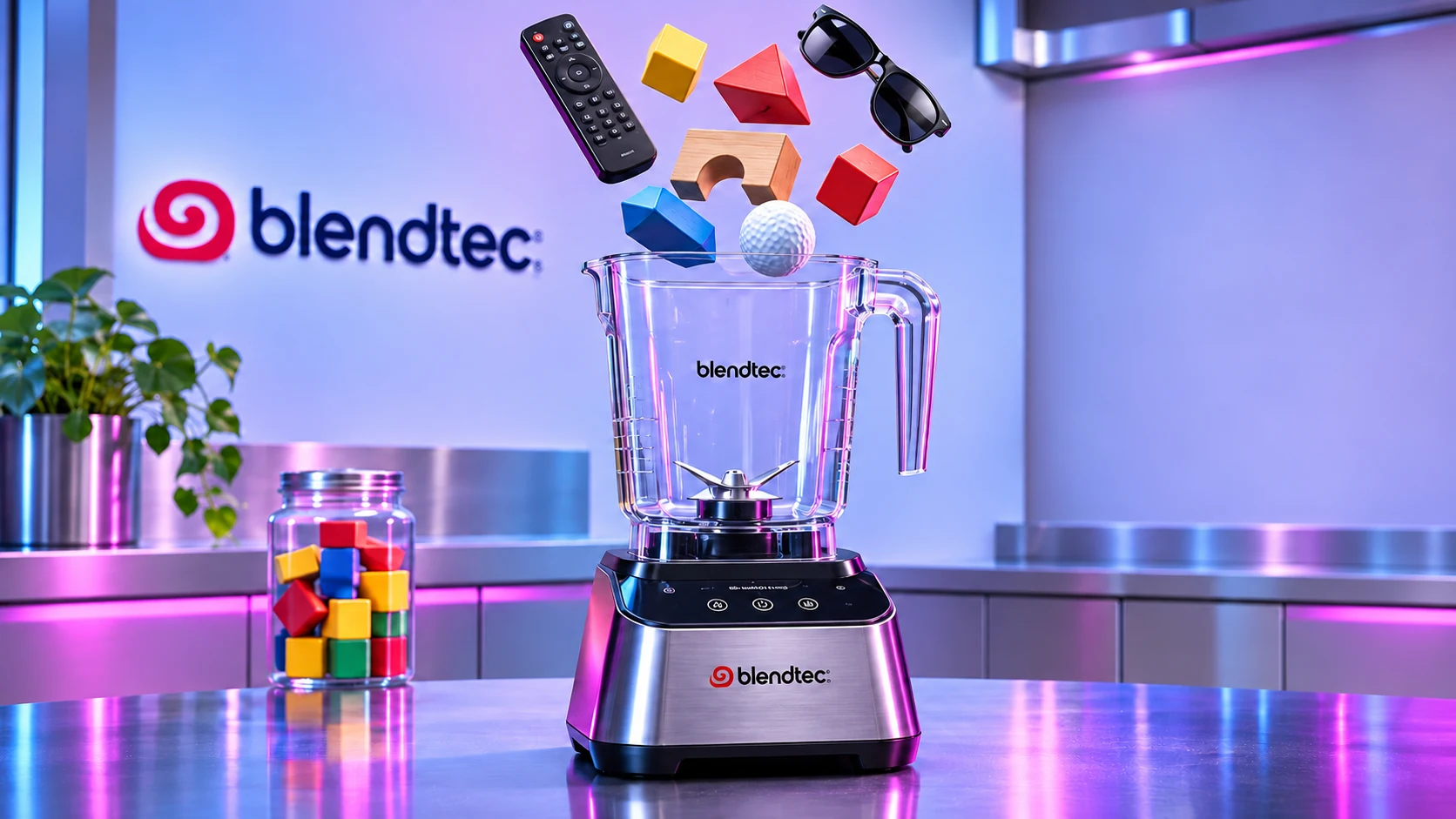
Marbles. Golf balls. Wooden rake handles. Eventually, even iPhones. And then it filmed the results. What began as a small marketing experiment became one of the most recognisable viral video campaigns of the early YouTube era. But the real lesson isn't that Blendtec created entertaining videos. It's that the company discovered a compelling way to demonstrate its value to people who didn't yet understand why they should buy its product.
The challenge of being discovered
Blendtec wasn't a struggling manufacturer with an inferior product. Quite the opposite. Its founder, Tom Dickson, was an engineer who had spent years developing powerful blending technology. The company had built a business serving commercial customers. But the consumer market offered an important growth opportunity. The difficulty was getting people to notice Blendtec and understand why its products were different.
Think about the challenge. Walk into a kitchen appliance shop and you'll see several blenders. They all look broadly similar. They all claim to blend ingredients. And they all promise some combination of power, quality and convenience. So why should someone pay more for one particular machine? Blendtec could explain its motor specifications. It could advertise how powerful its blades were. It could publish technical comparisons.
But none of those approaches would necessarily make the difference obvious to someone who had never heard of the company. Customers needed to see what made the product worth choosing. And the solution was hiding in the company's own factory.
The idea behind Will It Blend?
In 2006, George Wright joined Blendtec as marketing director. One day, he noticed something unusual while walking through the manufacturing facility. There was sawdust on the floor. When he asked what had happened, he discovered that Tom Dickson had been testing the blenders by putting pieces of wood into them. This wasn't a publicity stunt. Dickson had been doing similar experiments for years.
As an engineer, he wanted to discover the limits of his machines. Would the blender break? Would the wooden board survive? Usually, the blender won. For Dickson, it was part of product testing. For Wright, it was a marketing opportunity. Here was a demonstration that could communicate the blender's extraordinary power without requiring a complicated explanation. People didn't need to understand the engineering.
They could simply watch what happened. And Wright realised something else. Watching a blender destroy unexpected objects was genuinely entertaining. That combination of product demonstration and entertainment became the foundation of the campaign. Wright proposed filming a series of short videos. The idea was simple. Put something unusual into a Blendtec blender. Turn it on. See what happens.
The company spent approximately $50 on items for the initial experiment, including a laboratory coat and objects to blend. The first five videos were produced using the company's existing resources. That distinction matters. The often-quoted $50 was the initial budget for props and related purchases, not the entire cost of producing and running the campaign. The videos featured Dickson wearing a white lab coat and safety glasses.
He would introduce an object, place it into the machine and attempt to blend it. The series had a wonderfully simple name. Will It Blend? The videos launched on YouTube in October 2006. According to Blendtec's own company history, the first five videos attracted approximately six million views within six days. For a relatively small manufacturer with limited consumer brand awareness, that was an extraordinary result. People watched.
They shared the videos. They told their friends. And suddenly, millions of people were discovering a blender manufacturer they'd previously never heard of.
Why the campaign worked
It's tempting to explain the campaign's success by saying people enjoy watching things get destroyed. And that's certainly part of it. But there's a more valuable business lesson underneath. Blendtec combined three things exceptionally well. People were already familiar with kitchen blenders. They knew what happened when you put fruit, ice or vegetables inside one. But marbles? A rake handle? An expensive mobile phone?
That created a question people wanted answered. Will the blender actually destroy it? The answer was entertaining enough to watch and surprising enough to share. This is what made the campaign more than entertainment. Every successful demonstration reinforced Blendtec's central selling point. Its machines were extraordinarily powerful. The company didn't have to keep making that claim. Viewers could see the evidence.
Even people who had no intention of buying a blender could understand what made Blendtec different. And for those considering a high-performance blender, that demonstration provided a memorable reason to investigate further. Blendtec didn't need to reinvent the concept for every video. The structure remained remarkably consistent. Choose an unusual object. Ask whether it will blend. Show the result.
That consistency made the series recognisable. It also created an almost endless supply of potential content ideas. Instead of constantly thinking of entirely new ways to promote its products, Blendtec had found a format that could demonstrate the same value proposition repeatedly. One strong idea became an ongoing marketing asset.
From attention to business results
The campaign quickly attracted attention beyond YouTube. Dickson appeared on television programmes, including The Tonight Show and The Today Show. The company received widespread media coverage. By June 2008, an interview published by Inc. reported that Blendtec's videos had accumulated more than 100 million views. But views alone don't tell us whether the campaign was commercially successful. What happened to sales?
In that same interview, Dickson reported that sales of Blendtec's home products had grown by approximately 700% since the campaign began. A 2009 Brigham Young University magazine article also reported a 700% increase in retail blender sales within approximately two years. That's a remarkable result. However, it's important to be precise.
These were company-reported sales figures, not independently audited evidence showing that every additional sale was caused by the videos. And the figure relates to Blendtec's consumer or retail blender business, not necessarily the company's entire revenue. The campaign generated attention, demonstrated the product and helped the brand reach a much larger audience.
But the sales increase cannot be separated perfectly from other business factors. What the evidence does establish is that the campaign coincided with substantial reported consumer sales growth and dramatically increased public awareness of Blendtec. That's a commercially meaningful outcome. This is where many businesses misunderstand the Blendtec story.
They see six million views, a tiny initial budget and enormous reported sales growth. And they conclude that they need to create viral videos. But that's the wrong lesson. Viral success is unpredictable. Even Tom Dickson acknowledged in a later interview that timing and luck contributed to the campaign. You cannot simply decide that your next video will attract millions of viewers.
Nor would millions of views necessarily help your business. Imagine a specialist business consultancy creating a video that attracts a million teenagers. That might be impressive. But if none of those viewers owns a business or needs consultancy services, how valuable is that attention? The commercial objective isn't simply attracting an audience. It's attracting people with a genuine reason to care about what you offer.
Blendtec's videos worked particularly well because the entertainment was inseparable from the product demonstration. People were watching the blender do something remarkable. And the blender was precisely what the company wanted to sell. That's the distinction worth understanding.
What businesses can learn
You don't need an unusual product or a YouTube channel to apply the underlying principle. Here are three questions worth considering. Many businesses rely on claims. We're experienced. We provide excellent customer service. We're specialists in our industry. But how much evidence do customers actually see? A software company could demonstrate how its product solves a difficult workflow.
An engineering firm could explain how it approaches a complex technical problem. A consultancy could show how it diagnoses a commercial issue and reaches a recommendation. Demonstrating expertise often communicates more than simply claiming to possess it. Blendtec recognised an opportunity to reach consumers through online video. That doesn't mean YouTube is automatically the right channel for your business.
Your customers might be more active on LinkedIn. They might search Google when they have an urgent problem. They might attend industry events, read specialist publications or respond to well-researched outreach. The important question is where your potential customers can be reached and what will make them pay attention. A strong message on the wrong channel can still fail. Attention is useful. But it's only the beginning.
After discovering your business, what should a potential customer do? Visit a relevant landing page? Request information? Book a demonstration? Make an enquiry? And when they take that step, is your business ready to respond? Blendtec's story shows how effectively a demonstration can create interest. But converting that interest into customers requires the rest of the buying journey to work as well.
Opportunity Generation and the GROW Framework
The Blendtec story illustrates the third pillar of the GrowthBoost GROW Framework. O: Opportunity Generation. This pillar examines how your business reaches suitable potential customers and creates opportunities to win their business. It considers the channels you use, the messages you communicate and the quality of the prospects those activities attract.
Blendtec had already developed a product with distinctive capabilities. Its challenge was finding a compelling way to communicate those capabilities to a wider consumer audience. The Will It Blend? campaign brought those strengths to life. It helped people discover the brand and understand what made its product different. But the story also demonstrates how closely the GROW pillars are connected.
Get Clarity: Understand the customers you want to reach. Refine Value: Identify what makes your product or service worth choosing. Opportunity Generation: Find a compelling way to put that value in front of potential customers. Win Customers: Make it easy for interested prospects to take the next step. Blendtec didn't use the GrowthBoost framework.
Its campaign illustrates the established marketing principle behind Opportunity Generation: creating demand starts with making your value visible to the right people.
Make your value visible
Blendtec didn't begin with a huge advertising budget. It began with something the company already had. A genuinely impressive product. A distinctive capability. And a demonstration that made people curious enough to watch. The breakthrough came from finding a better way to communicate that value. Your business may already have strengths that potential customers would find compelling.
The question is whether you're demonstrating those strengths to the right audience. Because being good at what you do isn't enough if the people who need you never discover why you're worth choosing. GrowthBoost helps established businesses examine how they attract prospects and turn them into paying customers.
Our free GrowthBoost Business Audit examines seven important areas of your customer acquisition process, including whether you're reaching suitable prospects through effective marketing channels. You'll receive an initial assessment score, personalised findings and practical recommendations highlighting potential weaknesses worth investigating. Take Your Free Business Audit