Introduction
Imagine running a pizza company where people recognise your name, know what you sell and can order from you almost anywhere. You've invested heavily in advertising. Your delivery service is well established. You've built one of the biggest pizza businesses in the world. There's just one rather embarrassing problem. Customers don't think your pizza tastes very good. That's the situation Domino's faced in the late 2000s.
The company had built its reputation around convenience and speedy delivery. But research revealed that many customers weren't particularly impressed with the product being delivered. Some were brutally honest. One customer famously compared the pizza crust to cardboard. Not exactly the kind of feedback you want when you're in the pizza business.
But instead of dismissing the criticism or simply launching another advertising campaign, Domino's made a decision that would change the company. It listened, changed its pizza and openly admitted that the old recipe wasn't good enough. What followed became one of the most memorable business turnarounds in modern marketing. And there's a lesson here for any business struggling to give customers a compelling reason to buy.
The problem behind the delivery promise
By 2008, Domino's was an established international pizza chain. People knew the brand. Its delivery network was one of its biggest strengths. But recognition wasn't the problem. Customers knew Domino's existed. The challenge was convincing more of them that its pizza was worth buying. The company had spent years emphasising delivery and convenience.
Those things mattered. But they weren't the only things customers considered when ordering a pizza. Taste mattered too. And that was where Domino's reputation had suffered. When Russell Weiner joined Domino's as chief marketing officer in September 2008, the company was facing stagnant sales and difficult economic conditions. Research involving customers, employees and franchisees reinforced an uncomfortable conclusion.
The company needed to improve the quality and perception of its core product. This wasn't something a better slogan alone could fix. Think about that for a moment. Domino's had the brand recognition, the distribution network and the ability to reach customers. But those strengths couldn't fully compensate for a product many people didn't particularly want. More advertising wasn't going to make the old pizza taste better.
Listening to customer feedback
Most businesses like hearing positive customer feedback. Compliments are reassuring. They confirm that what you're doing is working. Negative feedback is much harder to accept. Especially when you've spent years building the company being criticised. But Domino's didn't simply collect the complaints and file them away. The company took them seriously. It conducted extensive research into its pizza and what customers wanted.
According to Domino's own announcement in December 2009, the development process involved testing dozens of cheeses, 15 sauces and nearly 50 crust seasoning blends over approximately two years. Researchers worked with people who already ordered Domino's and customers who hadn't bought from the company for years. That's an important detail.
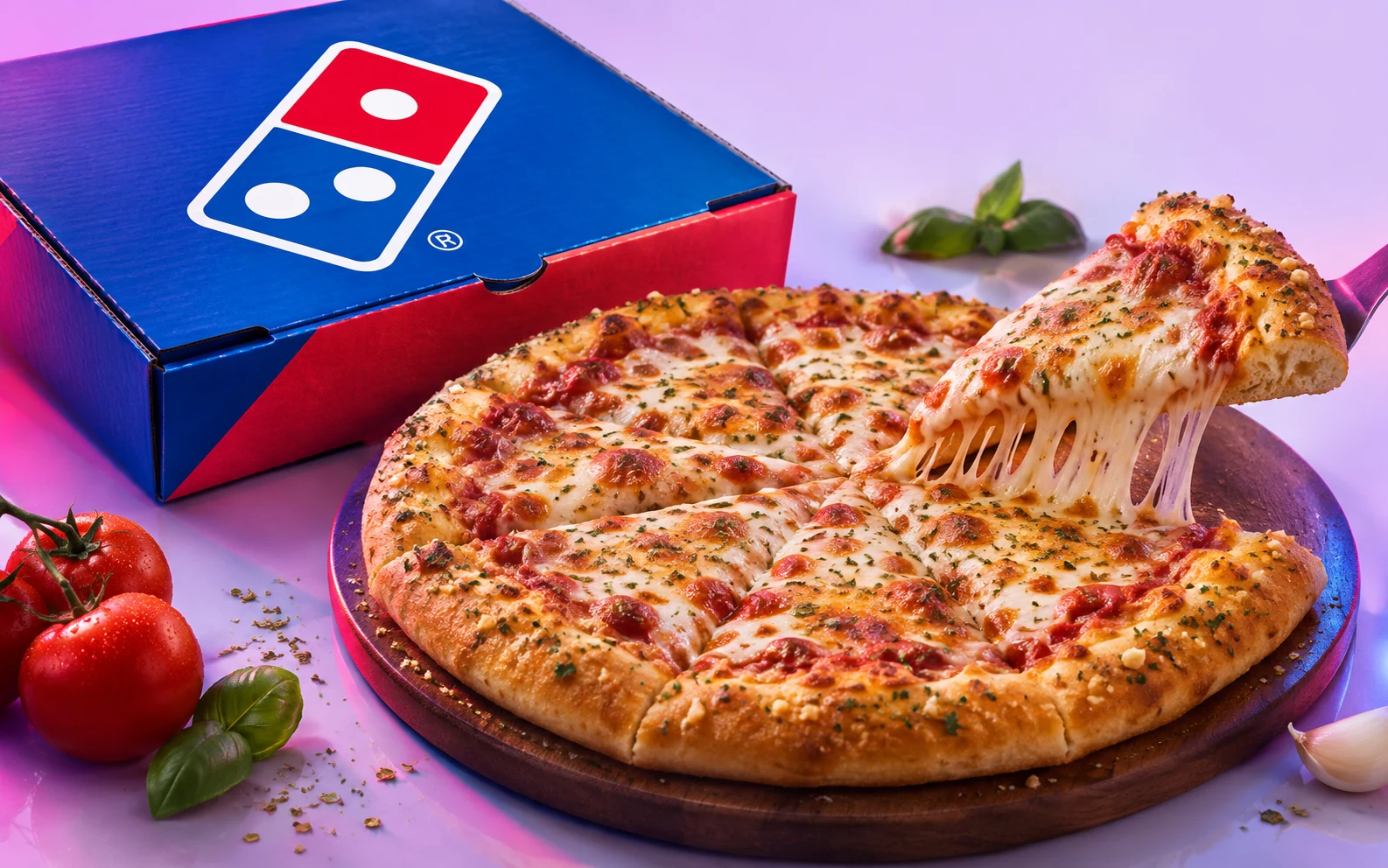
Domino's wasn't only listening to its loyal customers. It was also investigating why other people had stopped choosing it. The findings helped inform a completely revised pizza recipe. Rather than making a small cosmetic improvement, the company changed three fundamental ingredients. A new garlic-seasoned crust replaced the previous version. Domino's introduced a bolder tomato sauce, with additional herbs and seasoning.
The company changed its cheese blend, using shredded mozzarella with a hint of provolone. These weren't changes to the advertising. They were changes to the product itself. And that distinction is what makes this story so relevant to businesses today. Imagine you're selling something people don't particularly value. Perhaps your service isn't clearly differentiated.
Maybe your customers think you're expensive because they don't understand what makes you better. Or perhaps your offer doesn't address the problem they actually want solved. You can hire a brilliant copywriter. You can produce beautiful advertisements. You can invest thousands in generating traffic. But if the offer itself isn't attractive enough, you've still got a problem. That's what Domino's recognised.
The business needed to provide a better experience before trying to convince customers to give it another chance. And once it had improved the pizza, the marketing team faced another challenge. How do you persuade people to try something they've already decided they don't like? Simply announcing a new recipe wouldn't necessarily be enough. Customers had heard plenty of advertising promises before. Why should they believe this one?
Domino's decided to do something unusual. It admitted the criticism was justified.
Changing the product
In December 2009, Domino's launched its new pizza across the United States. But instead of pretending its previous product had been wonderful, the company confronted the criticism directly. Its Pizza Turnaround campaign featured actual customer complaints. Viewers saw Domino's employees and executives acknowledging the feedback and explaining what they had changed. The campaign didn't simply say the pizza was better.
It showed customers that the company had listened and taken action. This was a significant departure from conventional advertising. Businesses usually want to talk about how good they are. Domino's openly discussed what it had been getting wrong. That created a more believable story. The message was straightforward. We heard the criticism. We changed the product. Now judge the result for yourself.
The company supported the launch with television advertising, public relations, digital content, promotions and social media. It also introduced a guarantee encouraging customers to try the new recipe. What made the approach effective wasn't honesty alone. The admission was supported by a real change in what customers received. Without that improvement, the campaign would have been little more than another marketing promise.
The commercial response
The commercial response was significant. On 4 May 2010, Domino's announced its first-quarter financial results. US same-store sales had increased 14.3% compared with the same quarter in 2009. For comparison, the equivalent figure in the first quarter of 2009 had been an increase of just 1%. The new recipe and its promotional campaign generated considerable attention and encouraged customers to try Domino's again.
The momentum continued beyond the initial launch. For the full 2010 financial year, Domino's reported 9.9% growth in US same-store sales. These figures come from the company's official financial announcements. However, there's an important distinction to make. A 14.3% increase in same-store sales doesn't mean the company's entire revenue increased by that percentage. It measures changes in sales across comparable existing stores.
And while the new recipe and marketing campaign were central to the turnaround, it's impossible to attribute every additional sale to one change. Product improvements, advertising, promotions, publicity and broader business conditions all played a part. The evidence shows a commercially successful product relaunch supported by effective marketing, not that advertising alone rescued the business. That's the important lesson.
What businesses can learn
You don't need to run a restaurant to recognise the underlying problem. Consider a consultancy whose prospects regularly say its fees are too expensive. The owner assumes the problem is poor marketing. So the business invests in advertising and generates more enquiries. But prospects continue objecting to the price. What if the problem isn't the advertising? What if the business hasn't made its value clear enough?
Or the offer doesn't give customers a convincing reason to pay more than they would elsewhere? Until those questions are investigated, more marketing simply brings more prospects into the same conversation. Here are three lessons from Domino's turnaround. Don't rely entirely on your assumptions. Speak to customers. Ask what influenced their purchasing decision.
Investigate why prospects choose competitors and what prevents interested people from buying. The answers won't always be pleasant. But understanding those objections is far more valuable than guessing. Domino's was already well known for delivery. But customers also wanted enjoyable pizza. That difference influenced what the company needed to improve.
Your customers might value specialist knowledge, reliability, convenience, financial outcomes or a particular experience. Whatever matters most, your offer needs to reflect it. Make the offer more valuable before spending more money trying to sell it. Domino's didn't simply announce that it cared about customers. It demonstrated how customer criticism had influenced specific changes. Your business can do the same. Explain your process.
Demonstrate your expertise. Show examples of your work. Provide credible evidence that supports your claims. Customers need a reason to believe what you're telling them. Good marketing communicates that evidence clearly. It doesn't replace it.
Refine Value and the GROW Framework
The Domino's turnaround illustrates the second pillar of the GrowthBoost GROW Framework. R: Refine Value. This pillar examines your positioning, differentiation, value proposition, pricing and offers. Its central question is simple. Are you giving customers a compelling reason to choose your business? Domino's already had brand recognition and an established delivery service.
But those advantages weren't enough to overcome negative perceptions of its pizza. By listening to customers, improving the product and communicating those improvements, the company strengthened the value it offered. For an established service business, that might mean improving the offer itself. It could mean explaining your expertise more clearly. Or making the commercial benefits of your service easier for customers to understand.
The solution depends on what customers genuinely value and what's preventing them from buying. Domino's didn't use the GrowthBoost framework. Its turnaround illustrates the established commercial principle behind Refine Value.
Give customers a reason to choose you
If more people discovered your business tomorrow, would they have a compelling reason to choose you? Would they immediately understand your value? Would your offer address something they genuinely want? And would they believe the promises you're making? If the answer to those questions is unclear, generating more attention isn't necessarily the first problem to solve.
Sometimes the strongest marketing improvement starts with changing what you're offering, how you present it or the value customers receive. That's what makes the Domino's turnaround such a useful business story. The company didn't simply become better at advertising pizza. It improved the pizza and gave customers a stronger reason to believe the advertising. And that's a lesson worth remembering.
GrowthBoost helps established businesses examine how they attract prospects and turn them into paying customers. Our free GrowthBoost Business Audit provides an initial assessment of potential weaknesses in your customers, positioning, offers, marketing and sales processes. You'll receive a personalised assessment, findings and practical recommendations highlighting areas worth investigating.